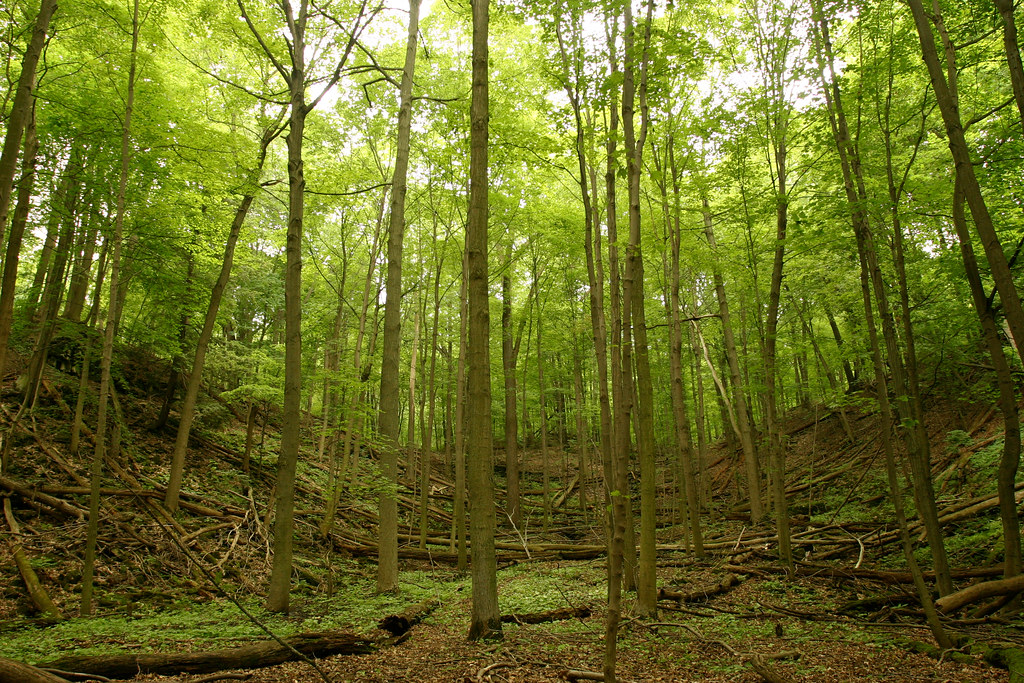
Walk through an old-growth forest and you might feel a sense of quiet, of stillness, of a world simply waiting. But beneath your feet, something extraordinary is happening. An intricate web of fungal threads stretches for miles in every direction, connecting tree root to tree root, shuttling carbon, water, phosphorus, and chemical signals across the woodland floor. Scientists have taken to calling it the “wood wide web,” and the more they study it, the stranger and more wonderful it becomes.
The Fungal Middlemen
The story begins with a partnership that is hundreds of millions of years old. When plants first colonised the land, they did so alongside fungi — and that relationship never really ended. Today, the vast majority of land plants form what biologists call mycorrhizal associations: a deep, mutually beneficial bond between a plant’s roots and microscopic fungal filaments called hyphae.
The deal is straightforward in principle. The tree pumps sugars — produced through photosynthesis — down into its roots and into the fungal network. In return, the fungi act as an extended root system, reaching into tiny pockets of soil the tree’s own roots could never access, and drawing up water and mineral nutrients, particularly phosphorus and nitrogen. Both parties get something they couldn’t easily obtain alone.
But the network doesn’t just serve individual trees. It connects them.
Sharing Resources Through the Web
One of the most striking findings from forest ecology research is that trees can transfer carbon and nutrients to one another through the mycorrhizal network — and that this transfer isn’t random. Studies conducted in forests of Douglas fir and other species have found that older, larger trees (sometimes called “mother trees”) tend to be highly connected hubs in the network, and that carbon flows preferentially toward younger seedlings, particularly those of the same species.
This matters most in the dim understorey of a dense forest, where young trees receive too little sunlight to photosynthesise at full capacity. Rather than starving, some seedlings appear to receive a carbon subsidy through the network — effectively being nursed by their larger neighbours until they can reach the light on their own.
Whether this constitutes something like intentional “parenting” is a question scientists debate carefully. The flow of resources may simply follow chemical gradients, with no decision-making involved. But the outcome — a network that supports the young and the struggling — is remarkable regardless of the mechanism.
Warning Signals in the Roots
The network doesn’t just move nutrients. There is growing evidence that it also carries chemical warning signals. When a tree is attacked by insects or infected by disease, it can release compounds into the soil and through its root connections. Neighbouring trees, upon receiving these signals, sometimes begin producing defensive chemicals of their own — even before any attacker has reached them.
Trees also communicate through the air, releasing volatile compounds that drift on the breeze and trigger responses in nearby plants. The underground network appears to work alongside these aerial signals, creating a layered warning system that operates across the forest.
- Mycorrhizal fungi connect the roots of different trees, sometimes across species.
- Carbon and nutrients flow through the network, often toward trees in greatest need.
- Chemical signals can travel underground, alerting neighbours to threats.
- Older, well-connected trees may act as network hubs, playing an outsized role in forest health.
Why This Changes How We See Forests
For a long time, ecology framed forests as arenas of competition — trees racing for light, water, and soil nutrients in a slow-motion struggle. That picture isn’t wrong, exactly. Competition is real and constant. But the mycorrhizal network adds a layer of cooperation that complicates the story in fascinating ways.
A forest, it turns out, may be better understood as a community than a collection of individuals. The fate of one tree is quietly entangled with its neighbours. When a dominant hub tree is felled or dies, the network it sustained can weaken, leaving connected seedlings more vulnerable. This has practical implications for forestry and conservation: removing large, old trees may do more damage than their timber value suggests.
How Much Don’t We Know?
For all that has been discovered, scientists are quick to acknowledge the limits of current knowledge. Mycorrhizal networks are extraordinarily difficult to study without disturbing them. Many findings come from controlled experiments that may not fully reflect the complexity of a living forest. The degree to which resource sharing is “cooperative” versus a byproduct of fungal self-interest is still being untangled.
But that uncertainty is part of what makes this field so exciting. Every careful study reveals another layer of complexity hiding beneath what looked like solid, unremarkable ground. The forest floor is not a foundation. It is a conversation — slow, chemical, ancient, and ongoing.
Next time you walk through the woods, consider what’s happening below your boots. You may be treading on one of the most sophisticated communication networks on Earth.
Image credits
- Forest Floor — "Forest Floor" by Martin Cathrae is licensed under CC BY-SA 2.0. To view a copy of this license, visit https://creativecommons.org/licenses/by-sa/2.0/.
- The forest floor — "The forest floor" by kern.justin is licensed under CC BY-NC-ND 2.0. To view a copy of this license, visit https://creativecommons.org/licenses/by-nc-nd/2.0/.